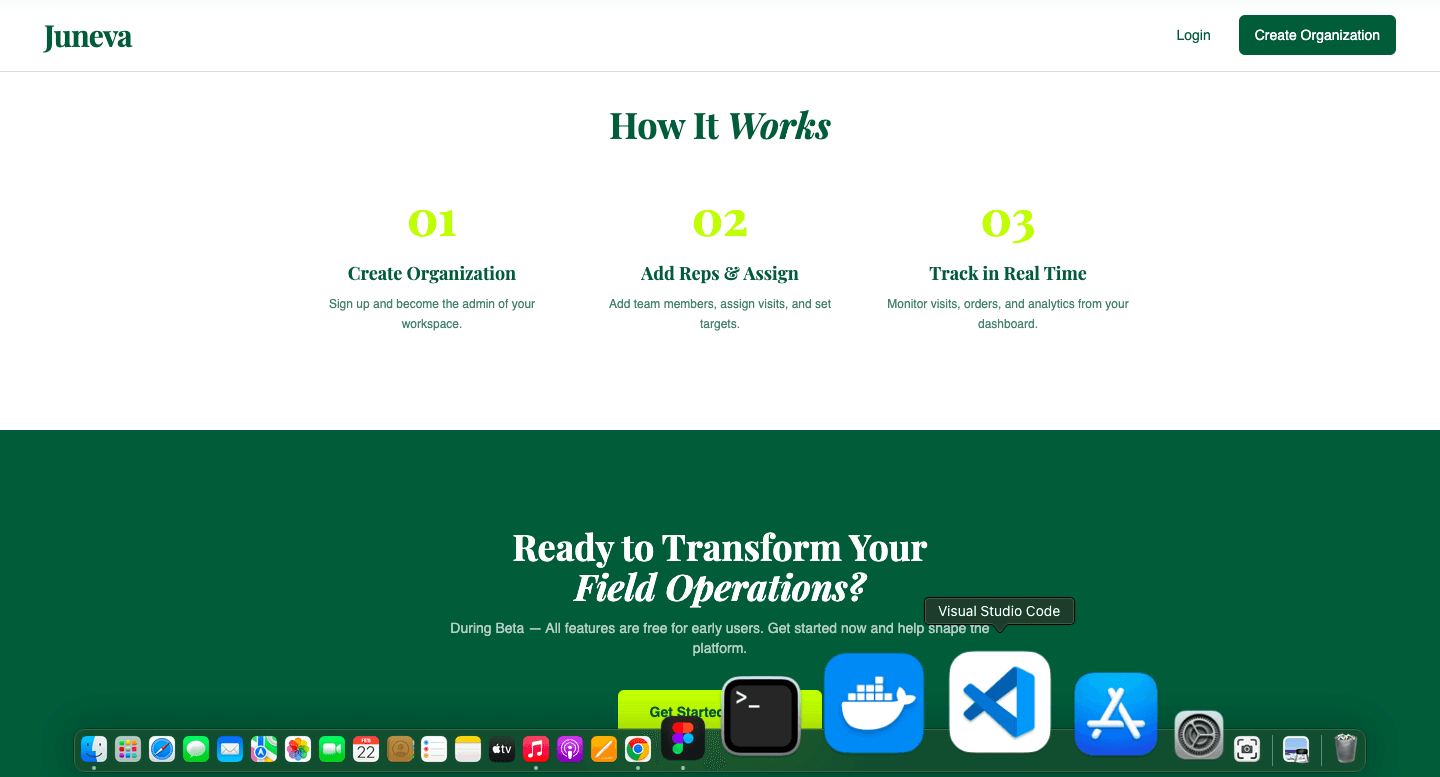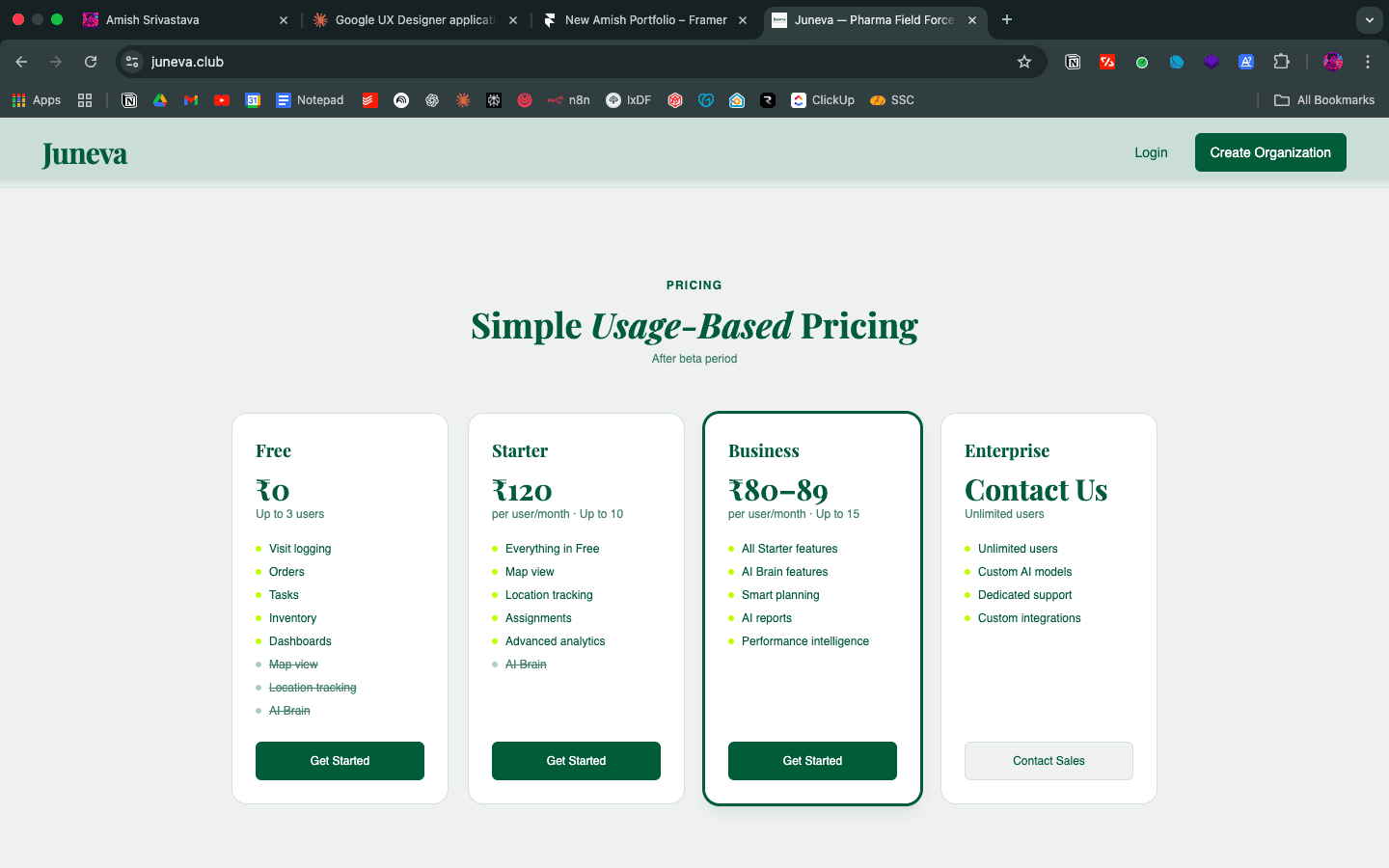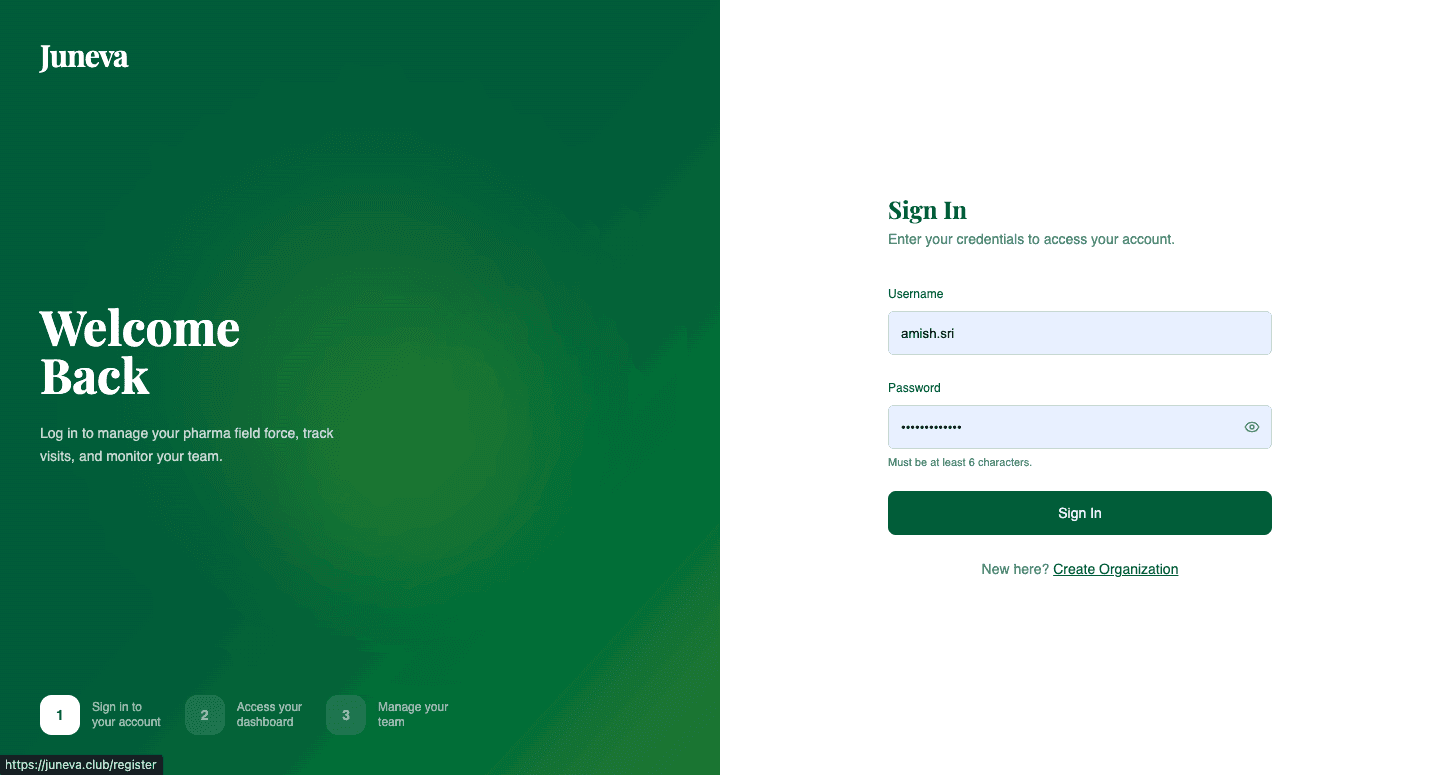





Juneva
<!--
Work info
-->
Client:
Juneva
Role:
Product Designer
Year:
2026
Building Juneva: Designing the Operating System for Pharma Field Execution
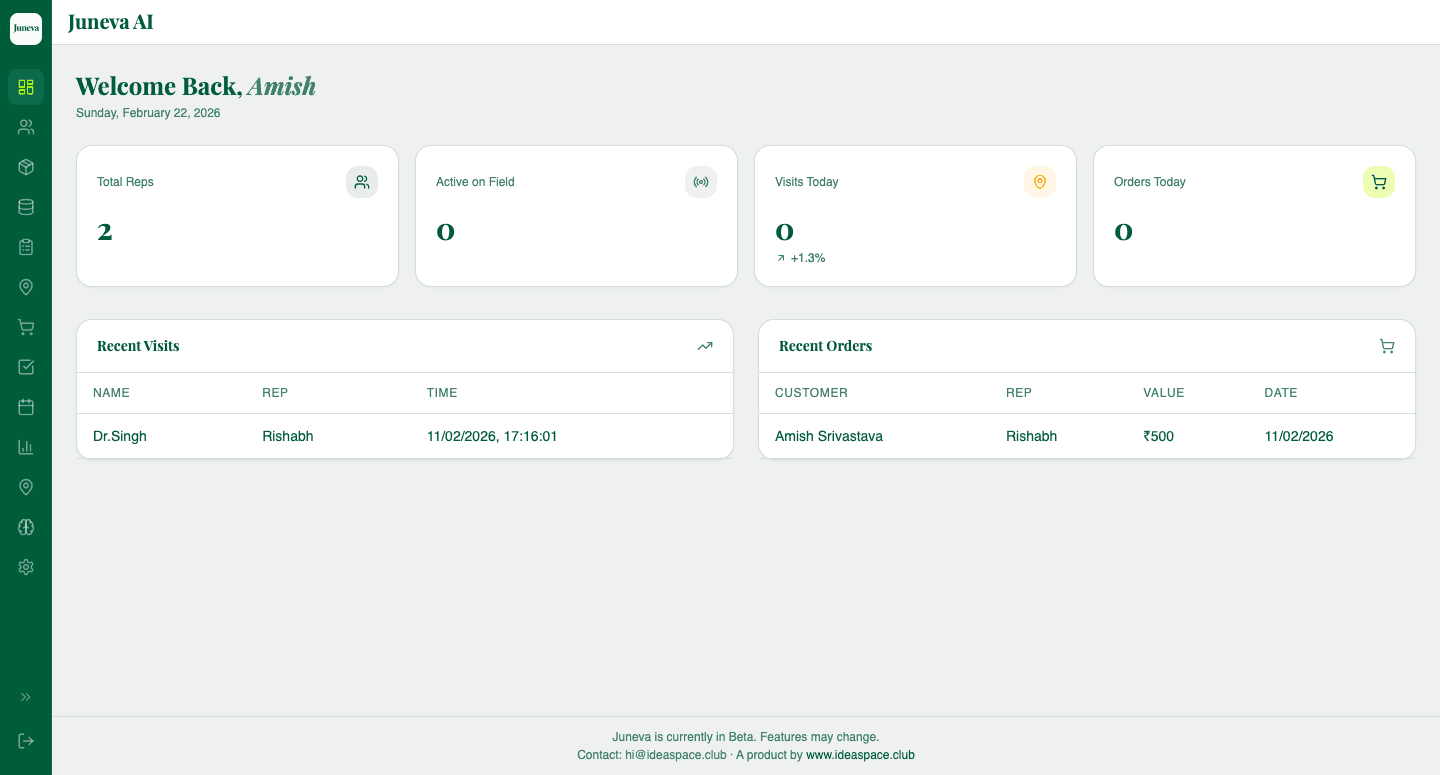
Pharmaceutical companies invest millions in R&D, compliance, and manufacturing precision. Yet when it comes to field execution — the daily movement of medical representatives, visit tracking, reporting, and performance monitoring — most teams still rely on spreadsheets, WhatsApp threads, and delayed weekly summaries.
Juneva was built to change that.
This is the story of how we designed a focused vertical SaaS platform specifically for pharmaceutical field-force management — and why every design decision was made with real-world workflows in mind.
The Problem We Observed
Through direct exposure to live pharma operations, the same inefficiencies kept surfacing:
Manual visit reporting with no verification layer
Inflated or unverifiable field claims
No structured daily planning for representatives
Weak task compliance tracking
No unified view of rep performance across territories
Fragmented data scattered across Excel files and chat threads
No actionable intelligence from the field data being collected
Pharma is data-driven at the lab level. It isn't at the field level.
That gap became the foundation of Juneva.
The Problem

Designing Juneva: Product First, Not Feature First
The guiding principle behind Juneva's design was straightforward:
"Design for how pharma teams actually work — not how SaaS tools assume they work."
Instead of building a generic CRM and adding pharma labels, Juneva was structured around real field execution flows:
Morning planning and territory assignment
Structured doctor, hospital, and pharmacy visit logging
Task completion and order capture in the field
End-of-day reporting back to managers
Performance review at the admin level
Every screen exists to reduce operational friction — not to add features for the sake of a pricing page.
📸 Image 2 — Design Philosophy
A user flow diagram showing the daily field execution loop — from morning planning to end-of-day reporting. This communicates systems thinking immediately.
Core Features
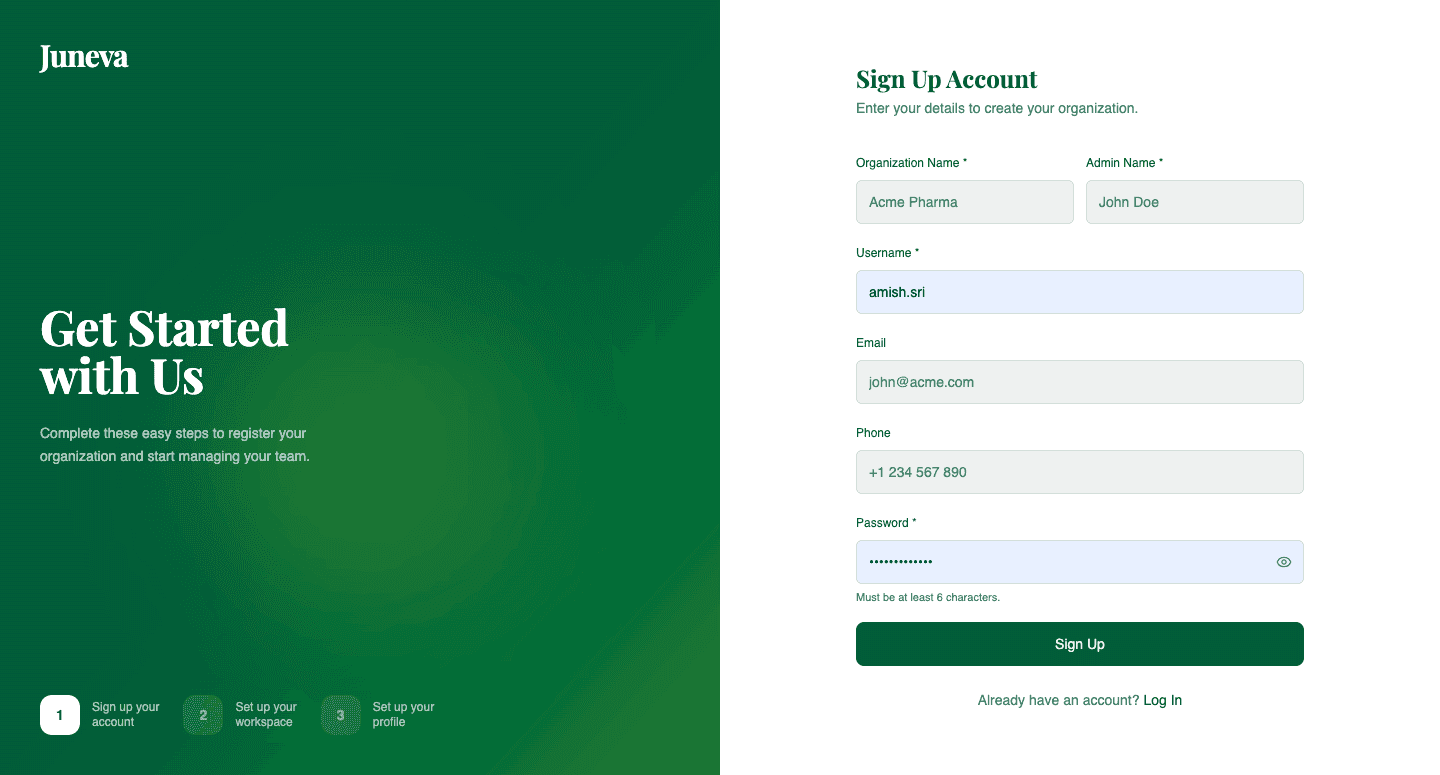
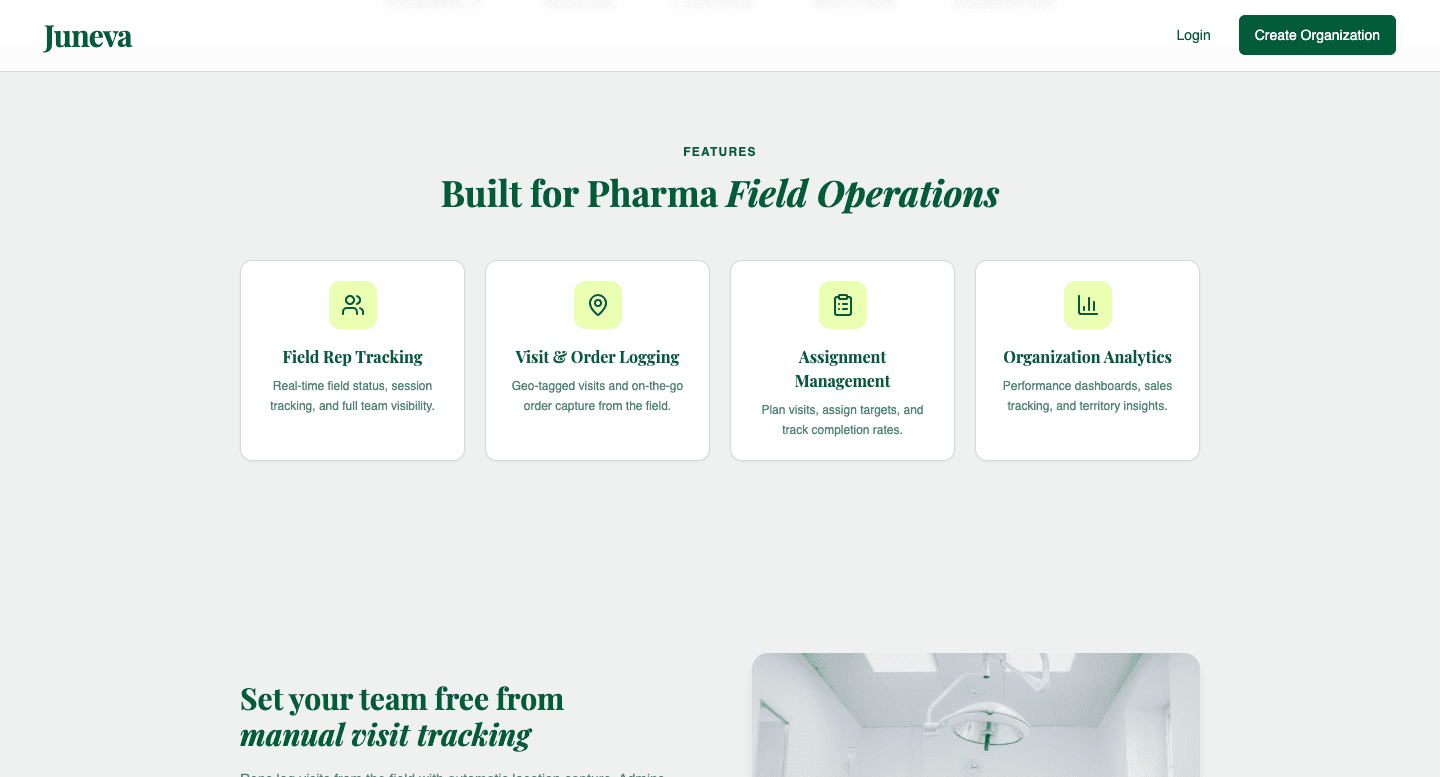
1. Multi-Organisation Workspace Juneva supports multiple pharma organisations operating independently within a secure, structured environment. Each organisation has admin-level controls, role-based access, representative onboarding, and a structured user hierarchy — making the system scalable from 5 reps to 500+.
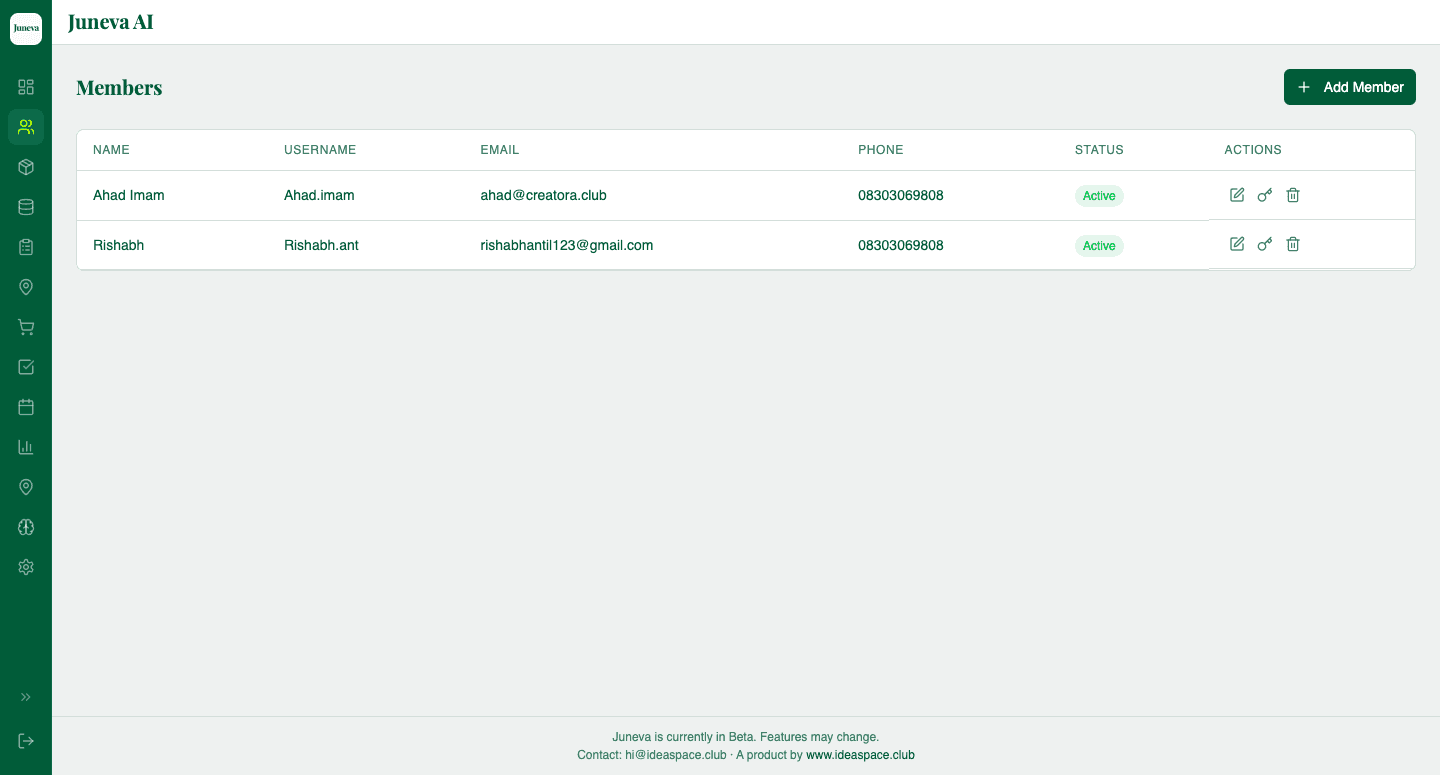
2. Member Management with Designation Layer Each team member profile includes full identity details, role assignment (Admin / Representative), designation (Medical Rep, Area Manager, Regional Head), status, and an attendance and activity summary. Clean reporting structures. No ambiguity.
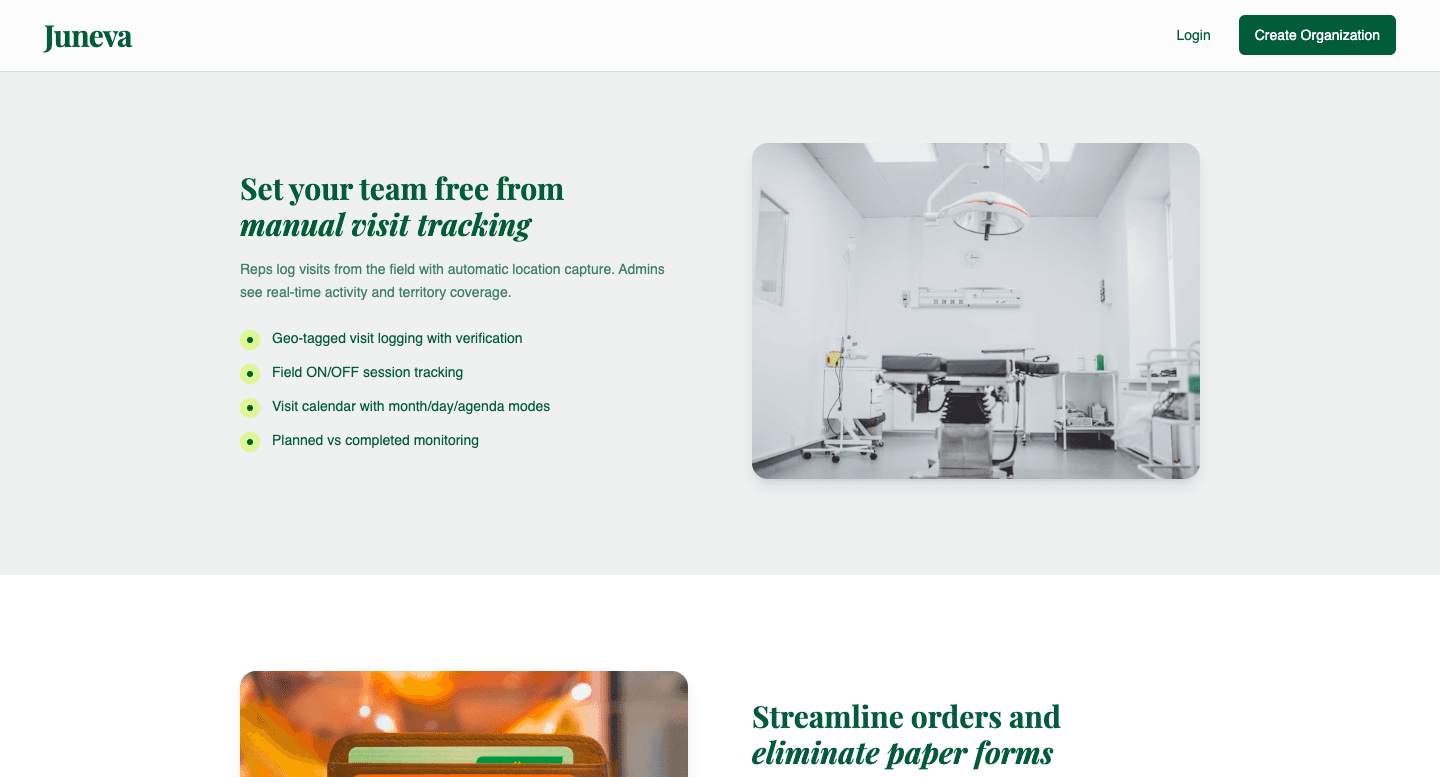
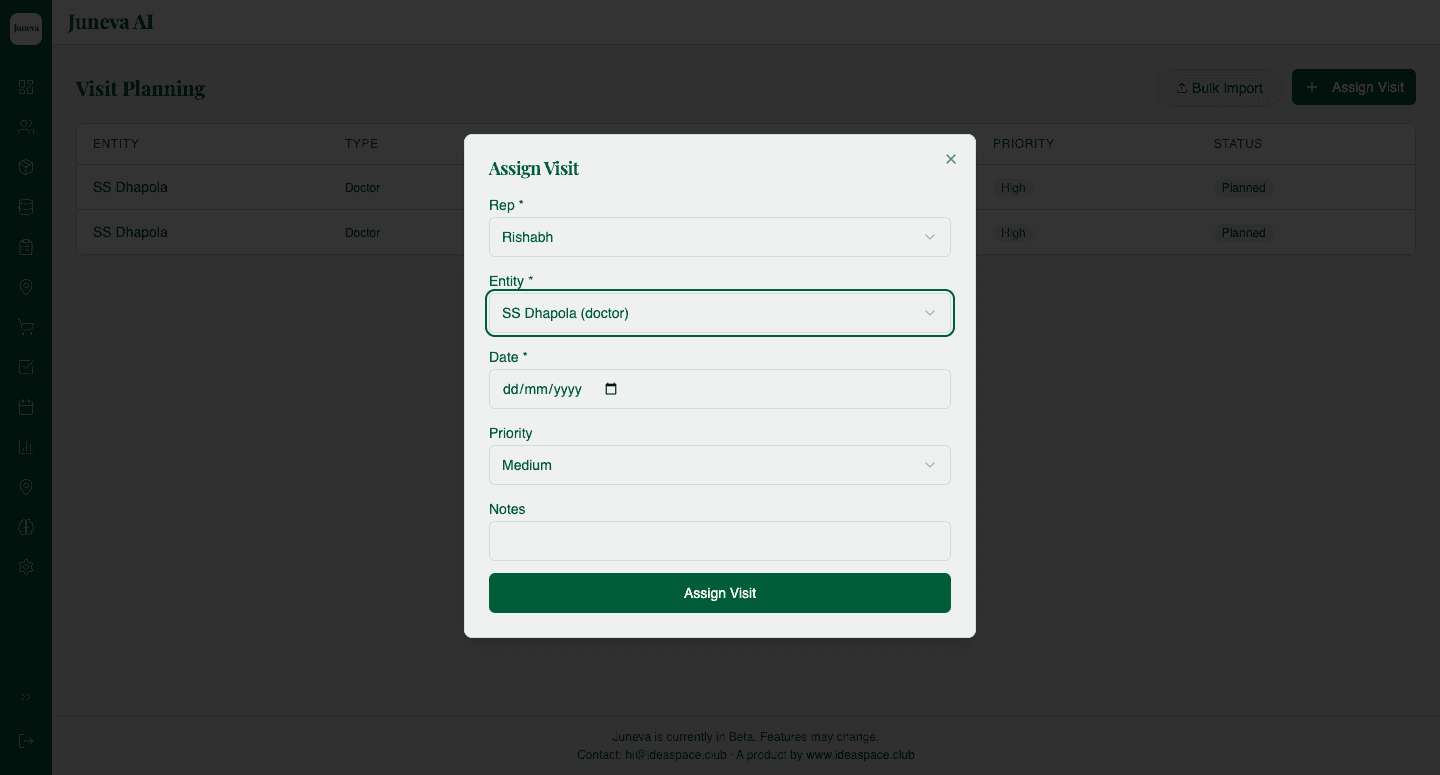
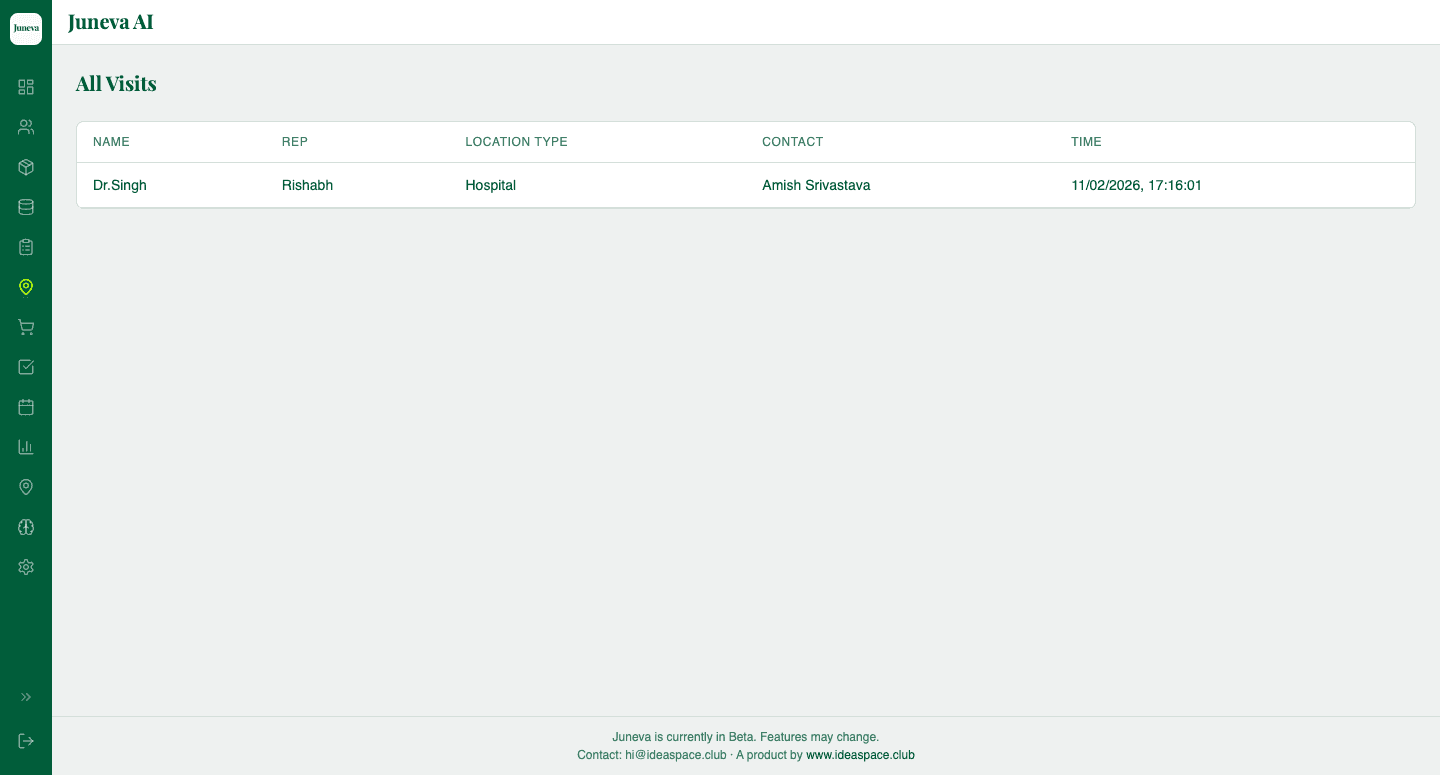
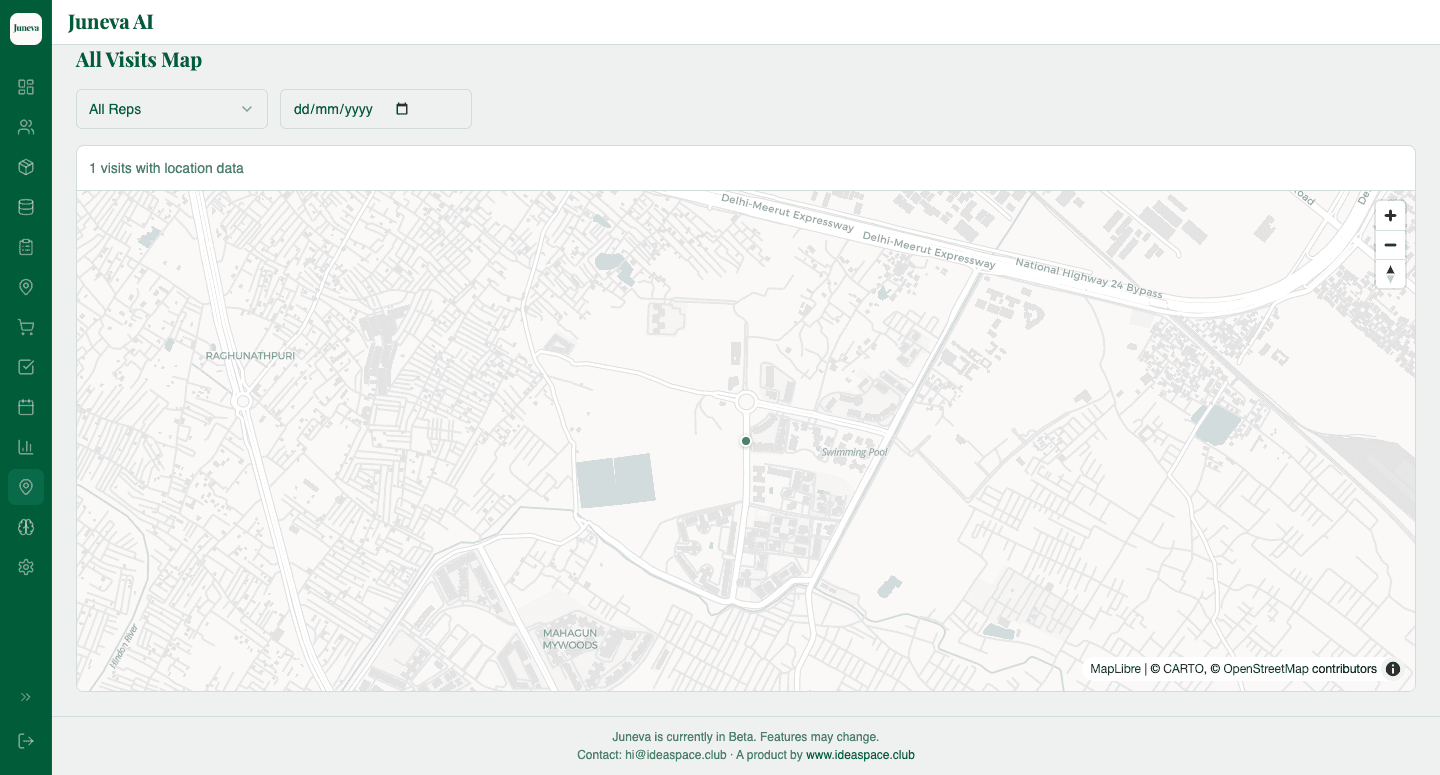
3. Visit Assignment & Logging Field operations are built around structured execution — admins assign visits, representatives log them, geo-tag support ensures credibility, and order capture is linked directly to each visit. No more guesswork about field movement.
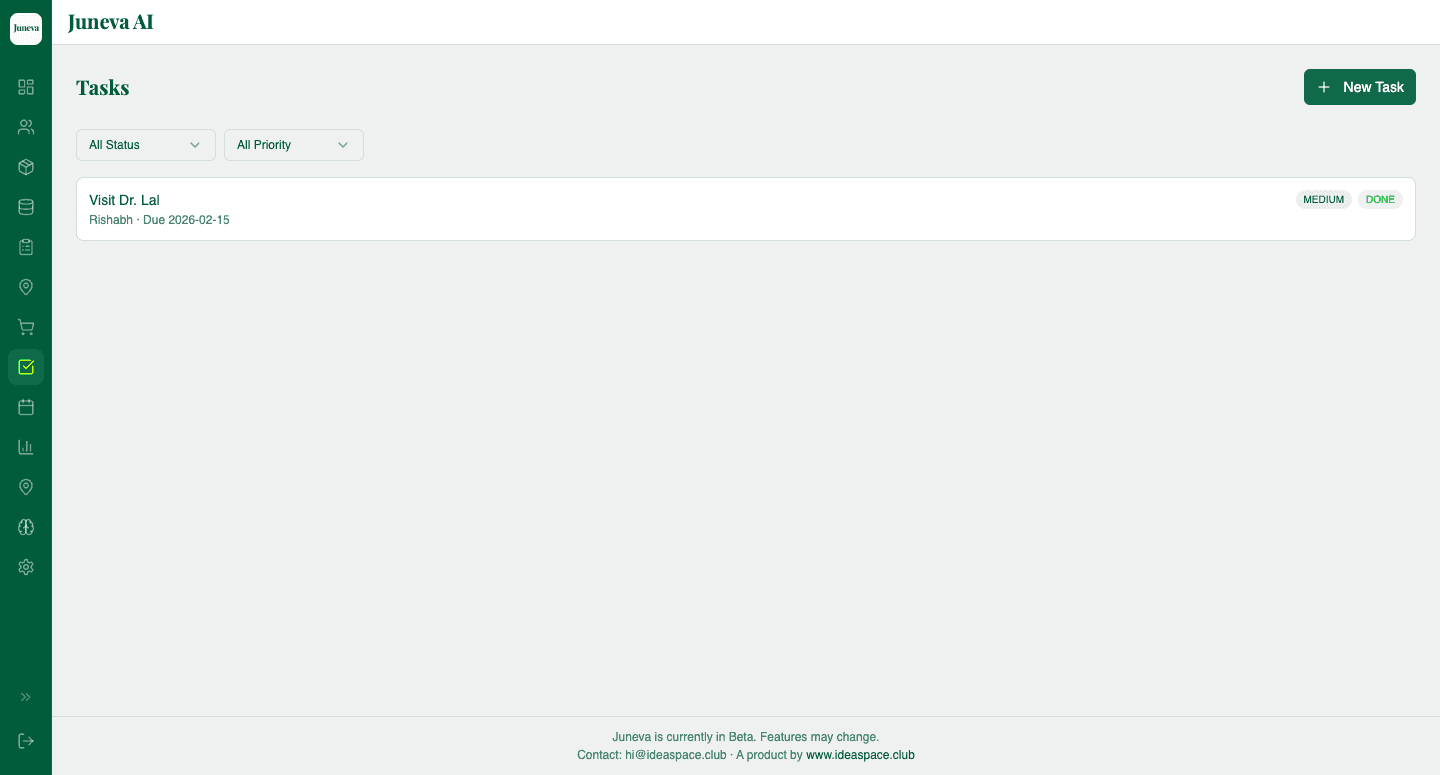
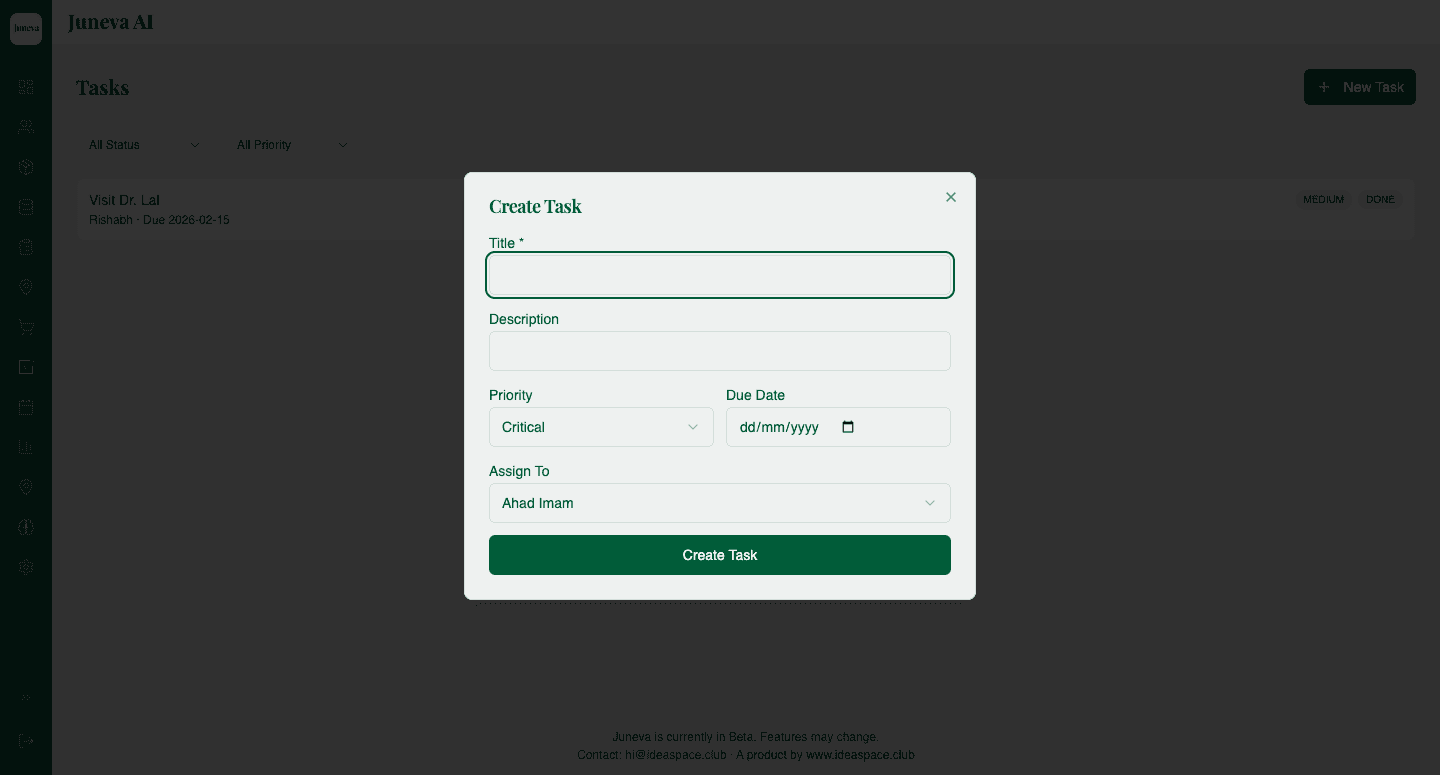
4. Task & Subtask Management Managers can assign tasks, set deadlines, track status, and monitor overdue compliance. Tasks are linked to field activities — not isolated in a productivity tool disconnected from actual work.
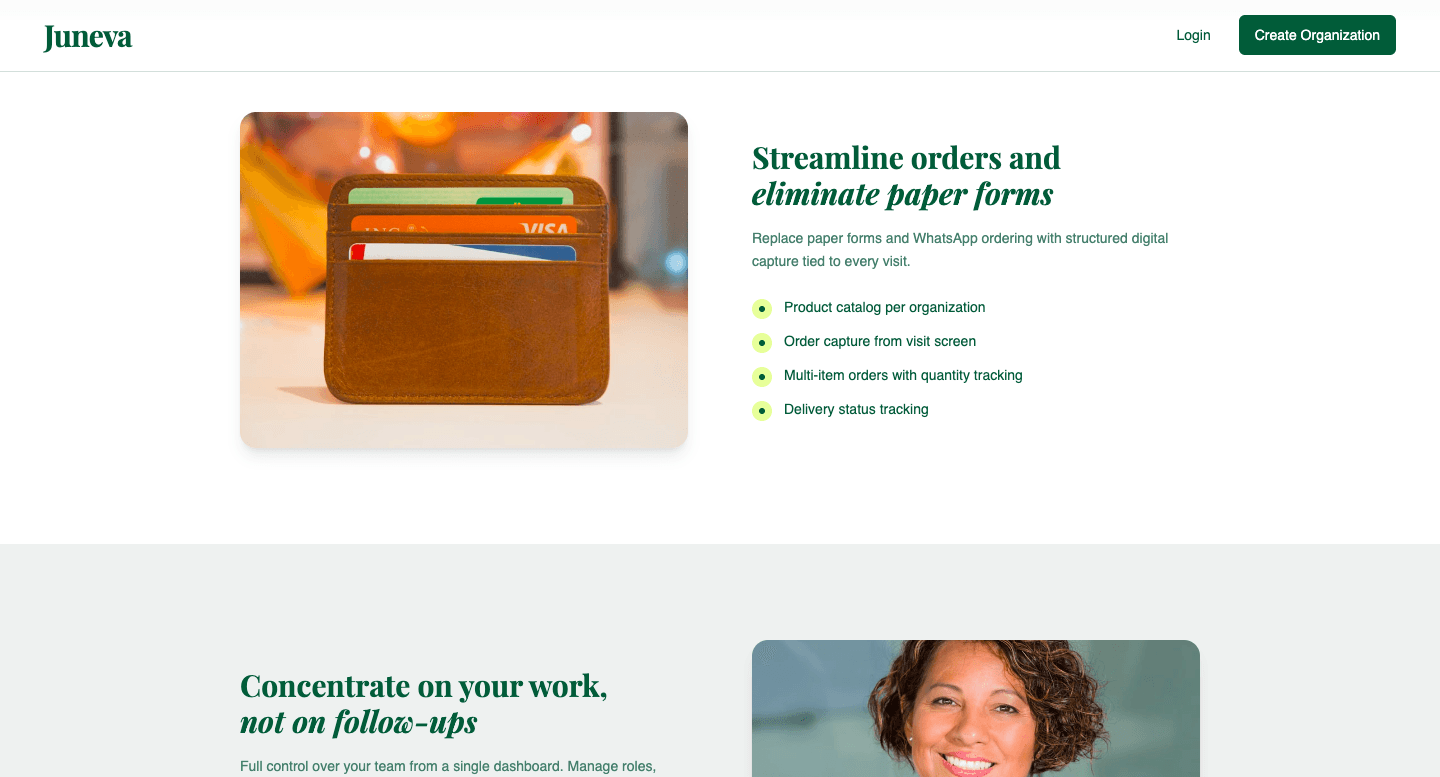
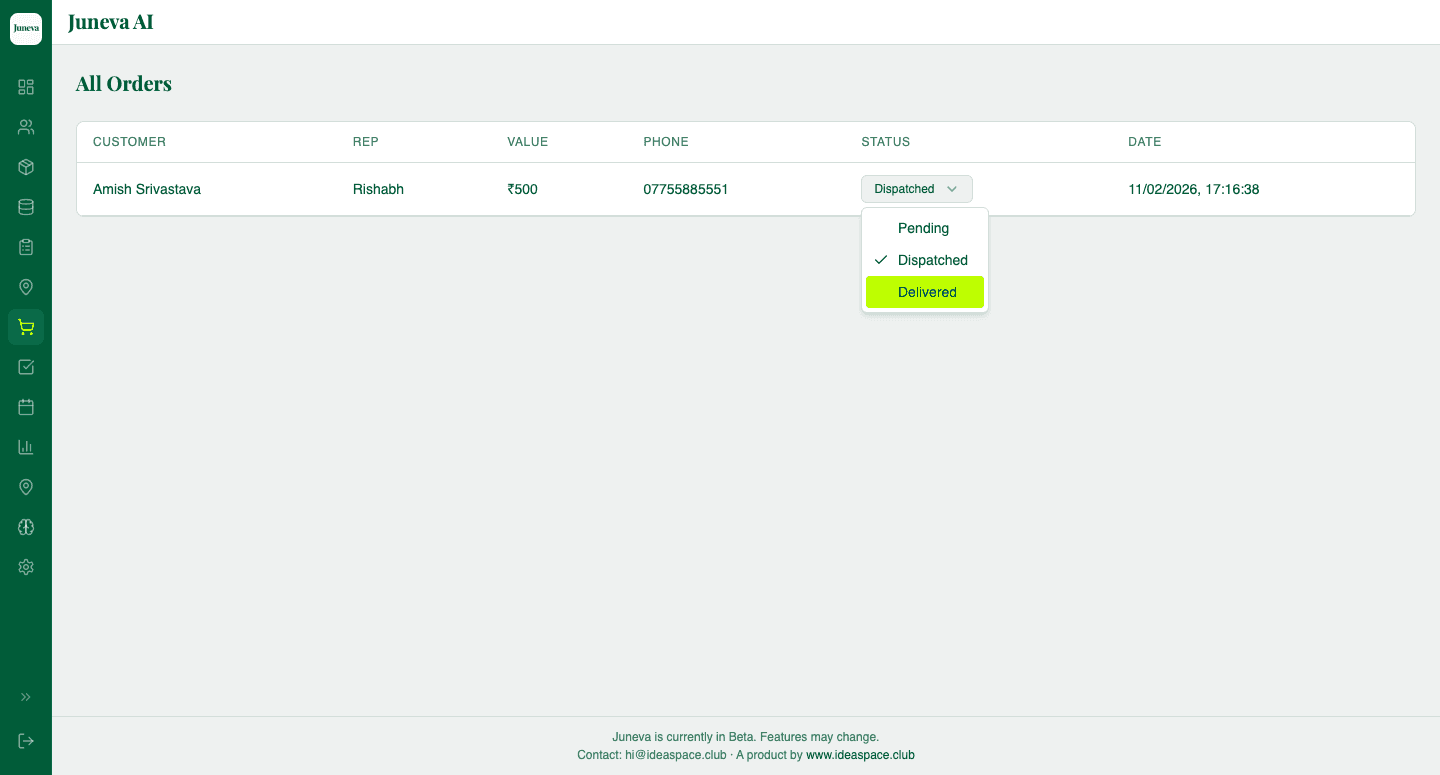
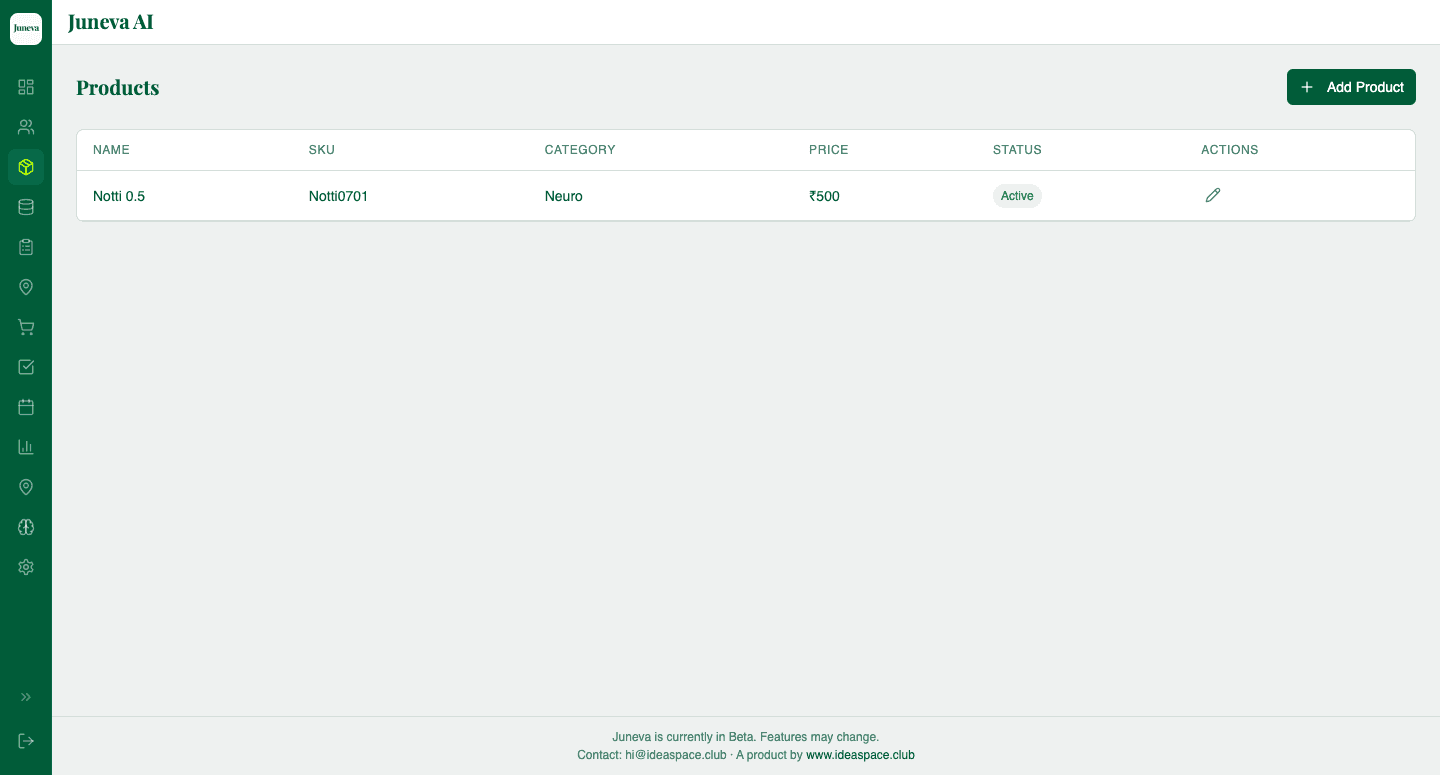
5. Order Capture Linked to Field Activity Orders are not separate entries. They are connected to a specific visit, a specific entity, and a specific rep — enabling full traceability and performance intelligence.
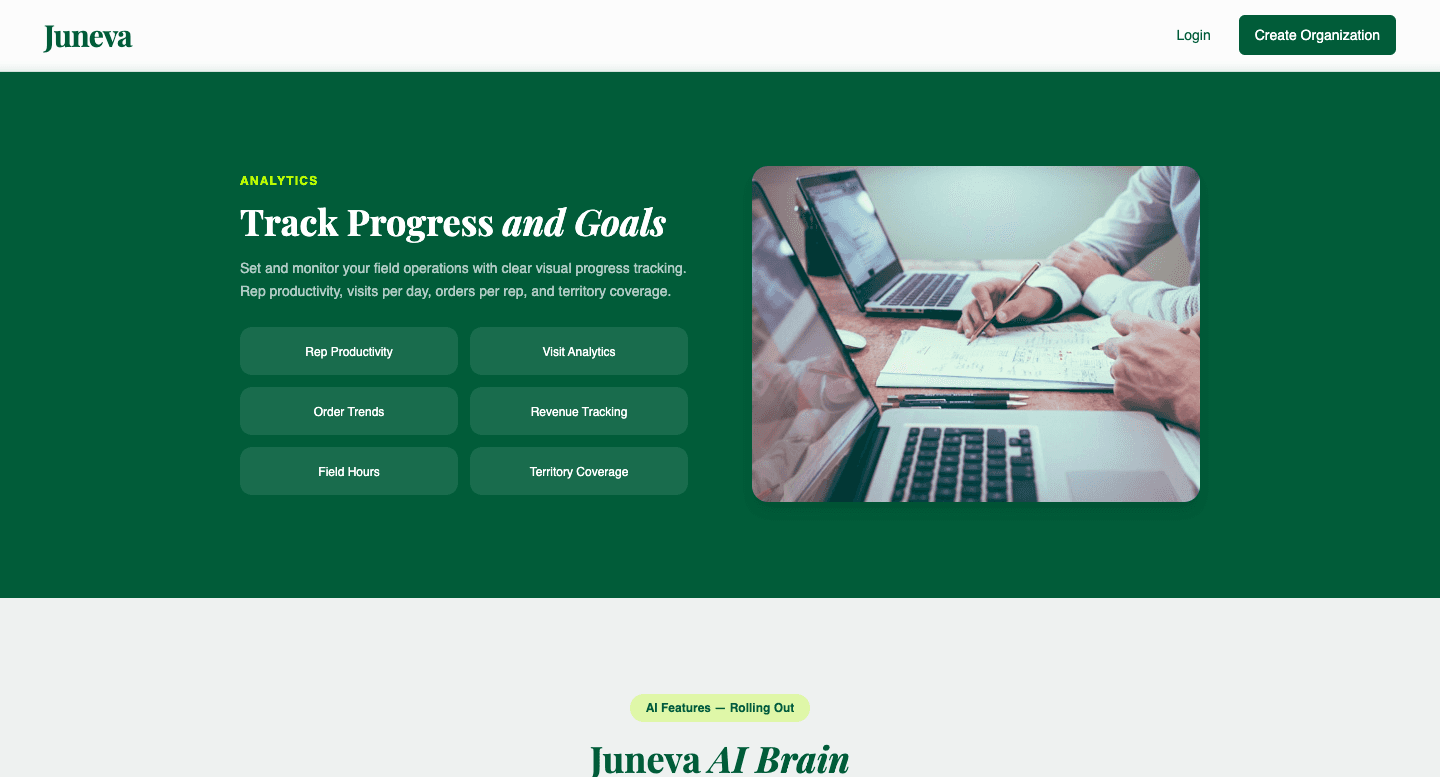
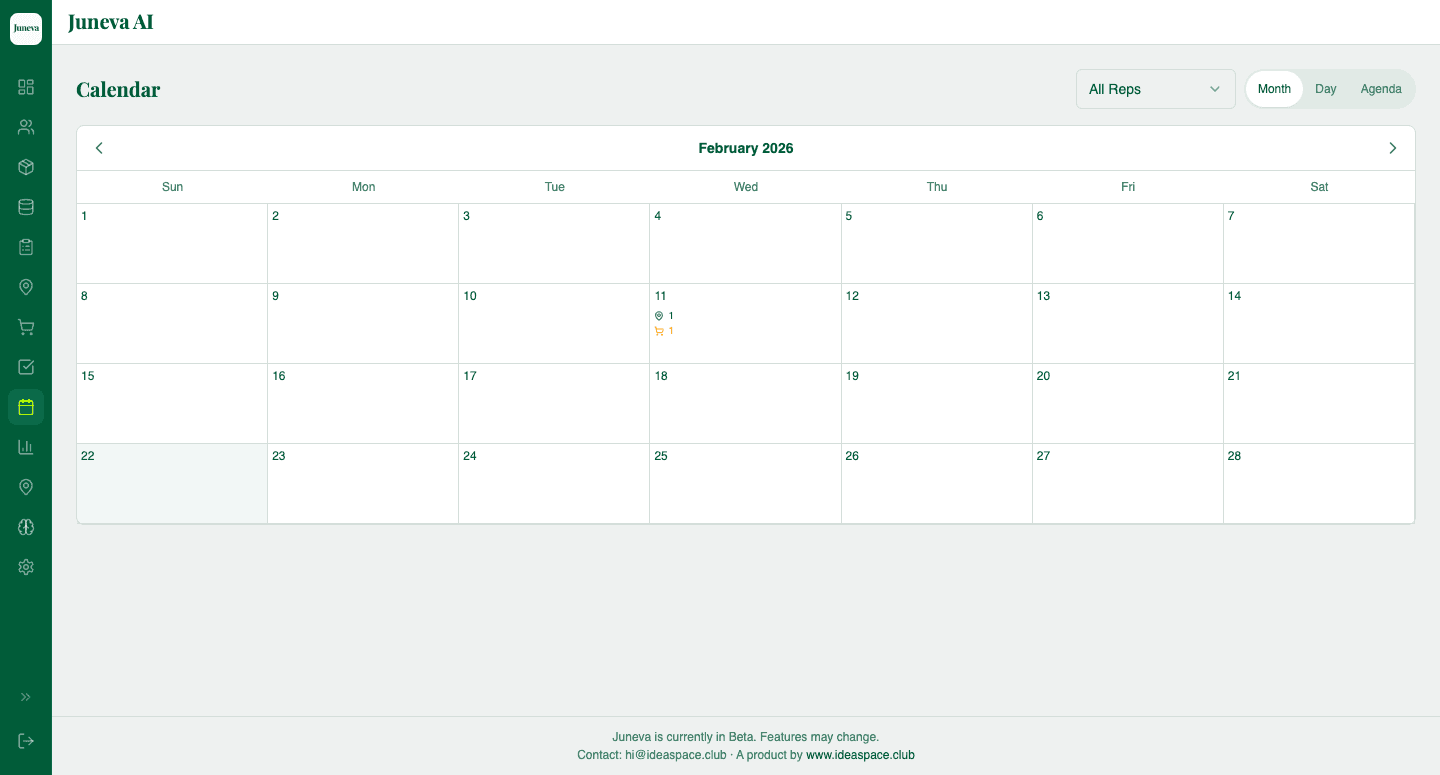
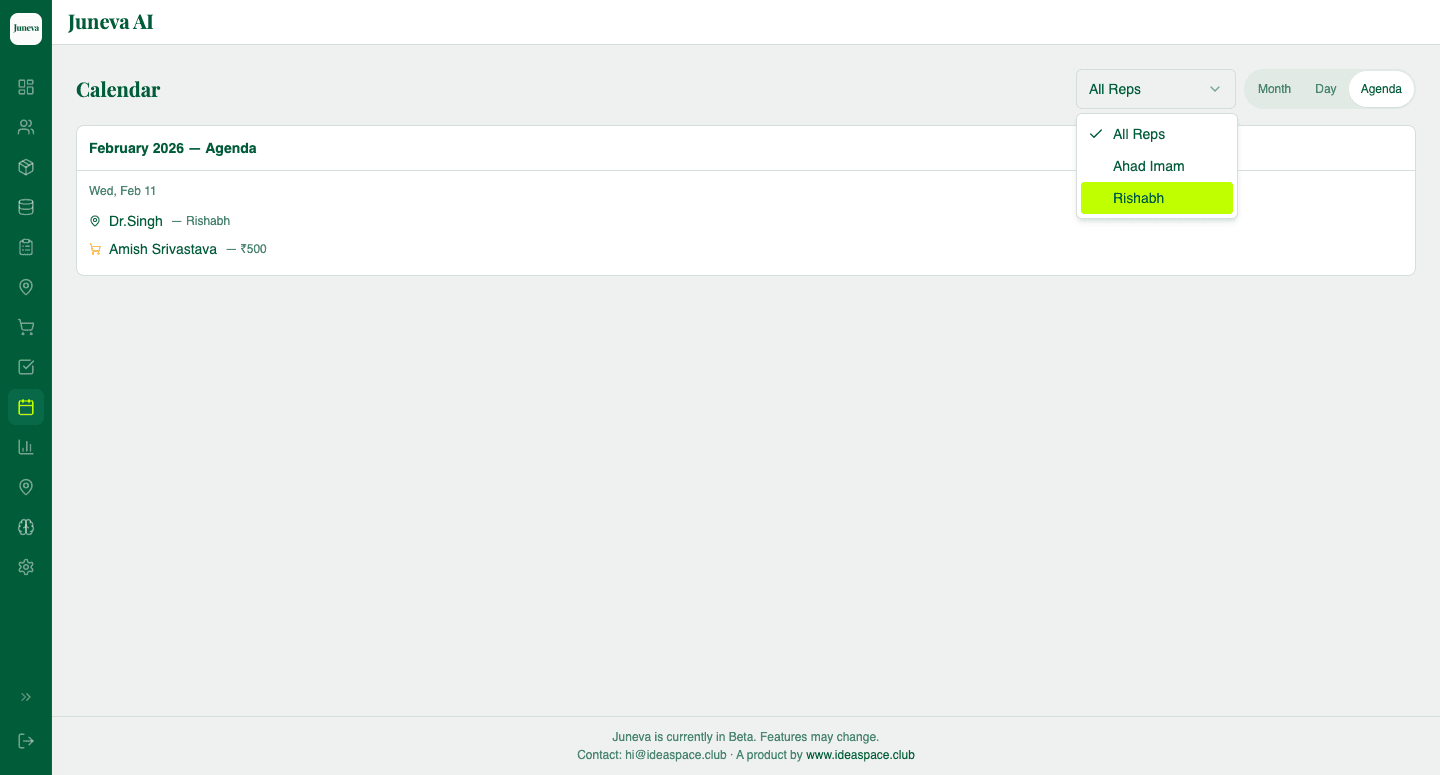
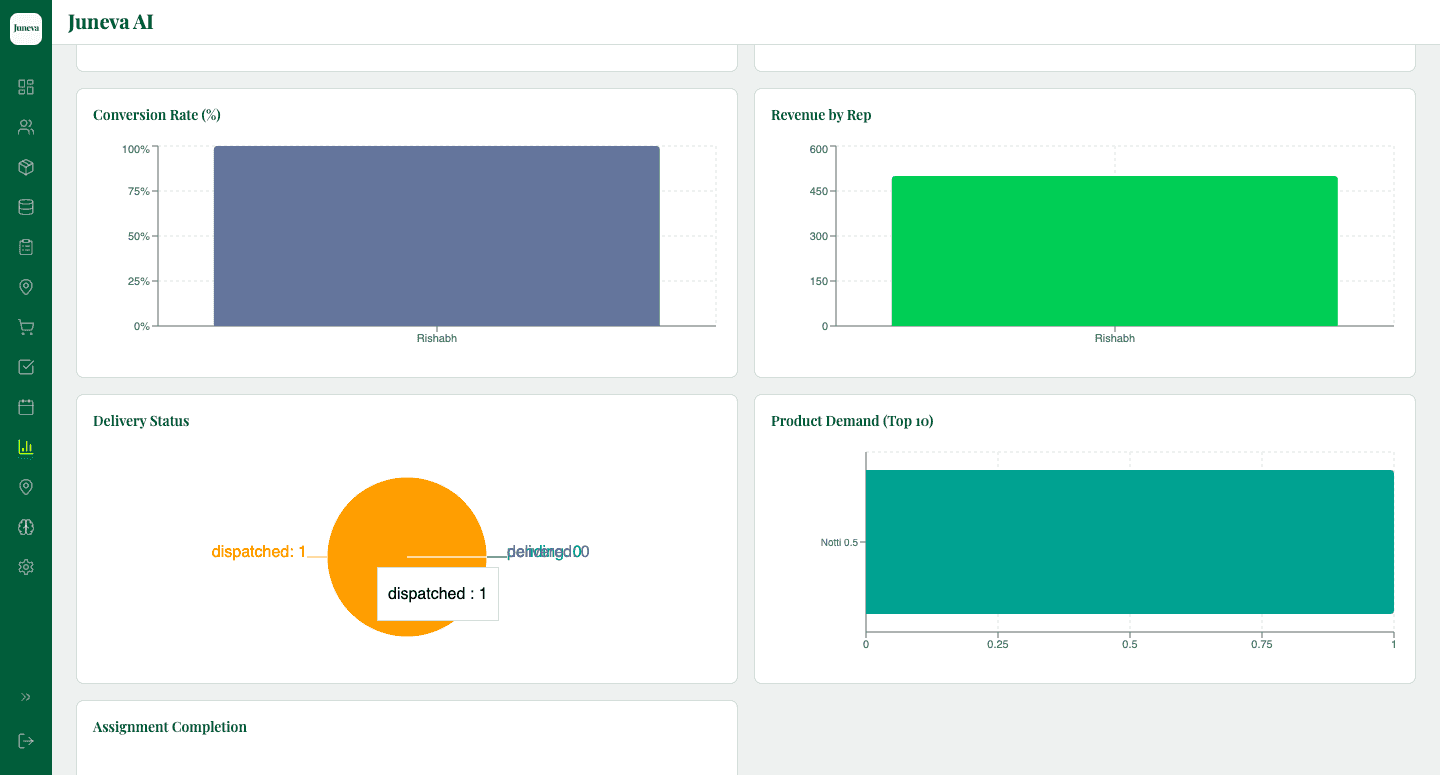
6. Attendance & Field Time Tracking A structured attendance system tracks start of day, breaks, and end of day — with net work-hour calculation. Reps see attendance in calendar format. Admins get full dashboards across the organisation. Actual field hours vs. reported activity — finally visible.
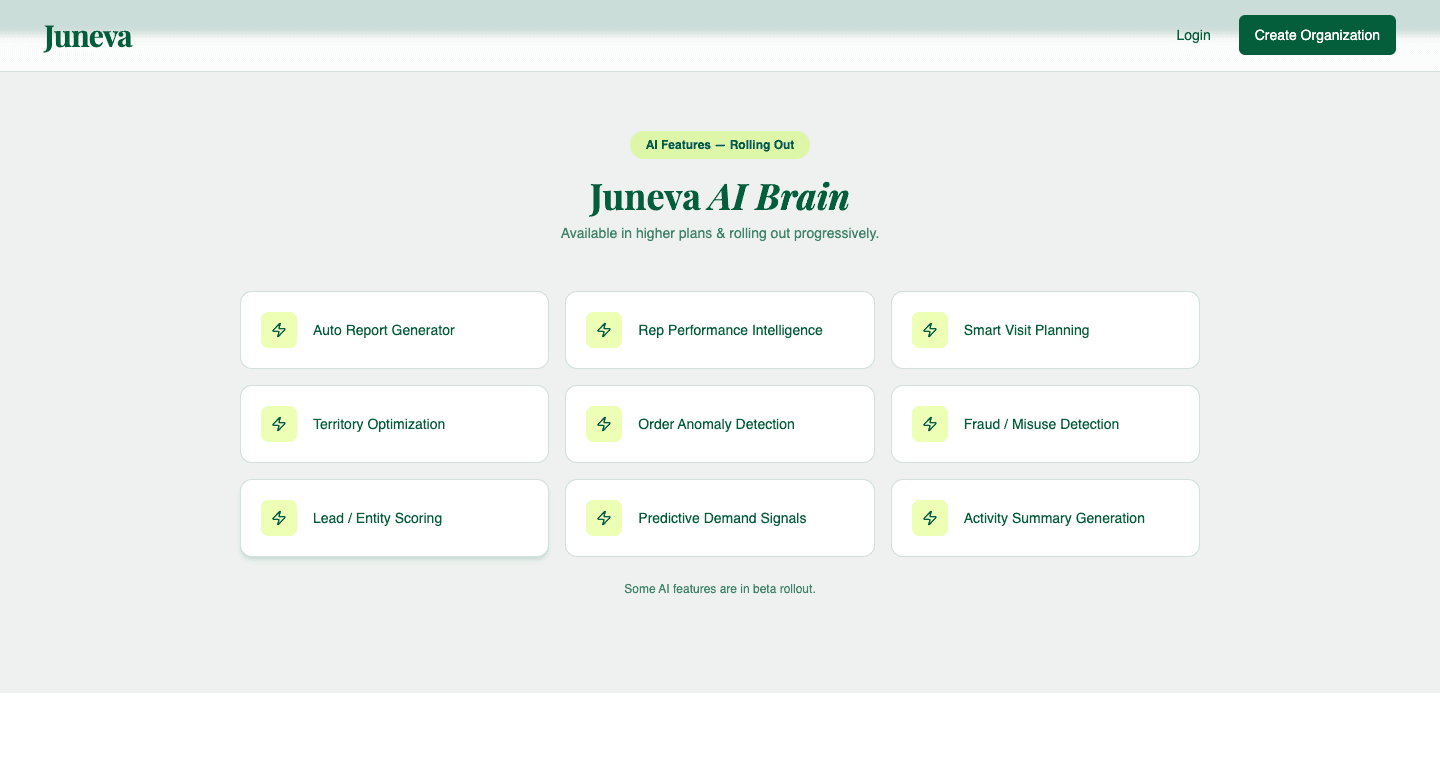
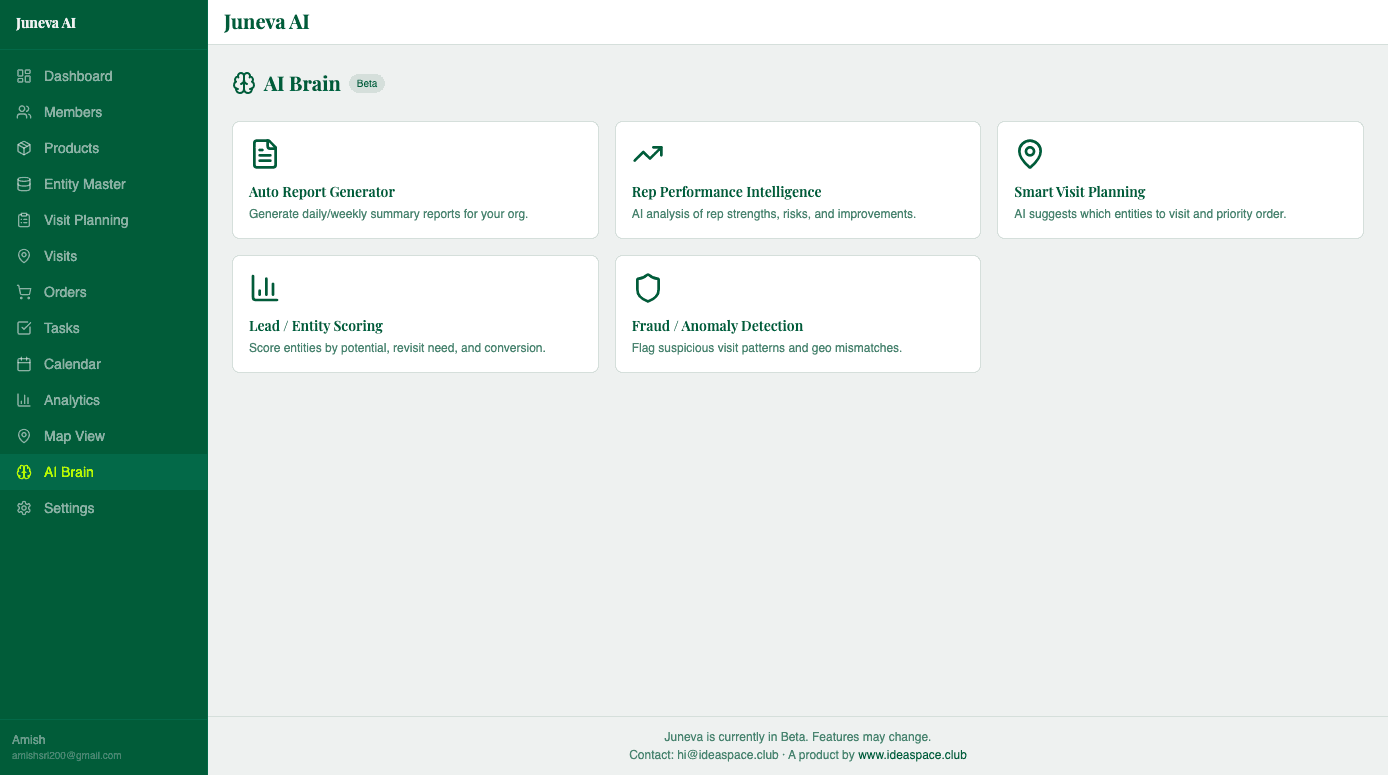
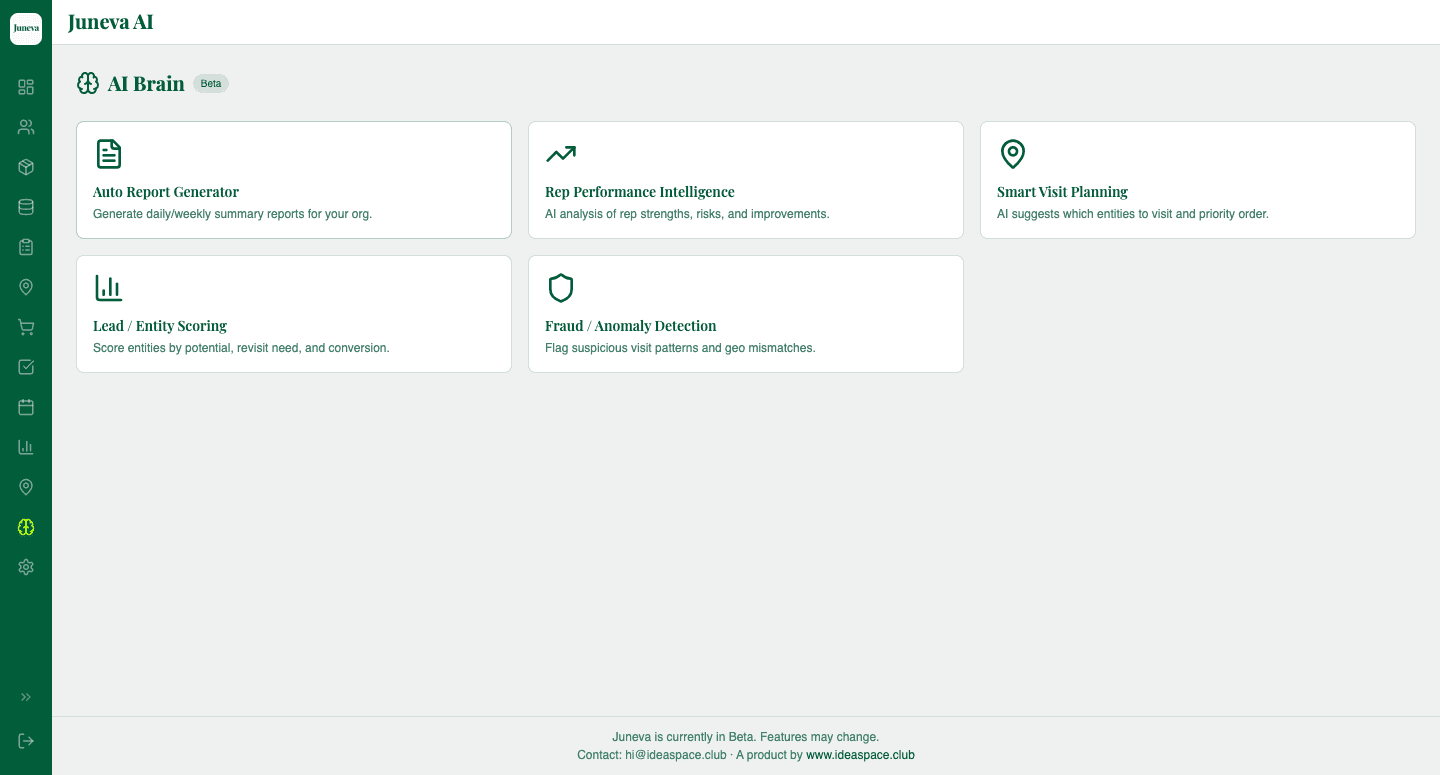
7. AI Intelligence Layer (Rolling Out) Juneva is evolving from a tracking tool into a field intelligence platform. The AI layer focuses on smart visit planning, performance pattern detection, rep productivity insights, auto-generated summaries, and anomaly detection — transforming raw field data into managerial intelligence.
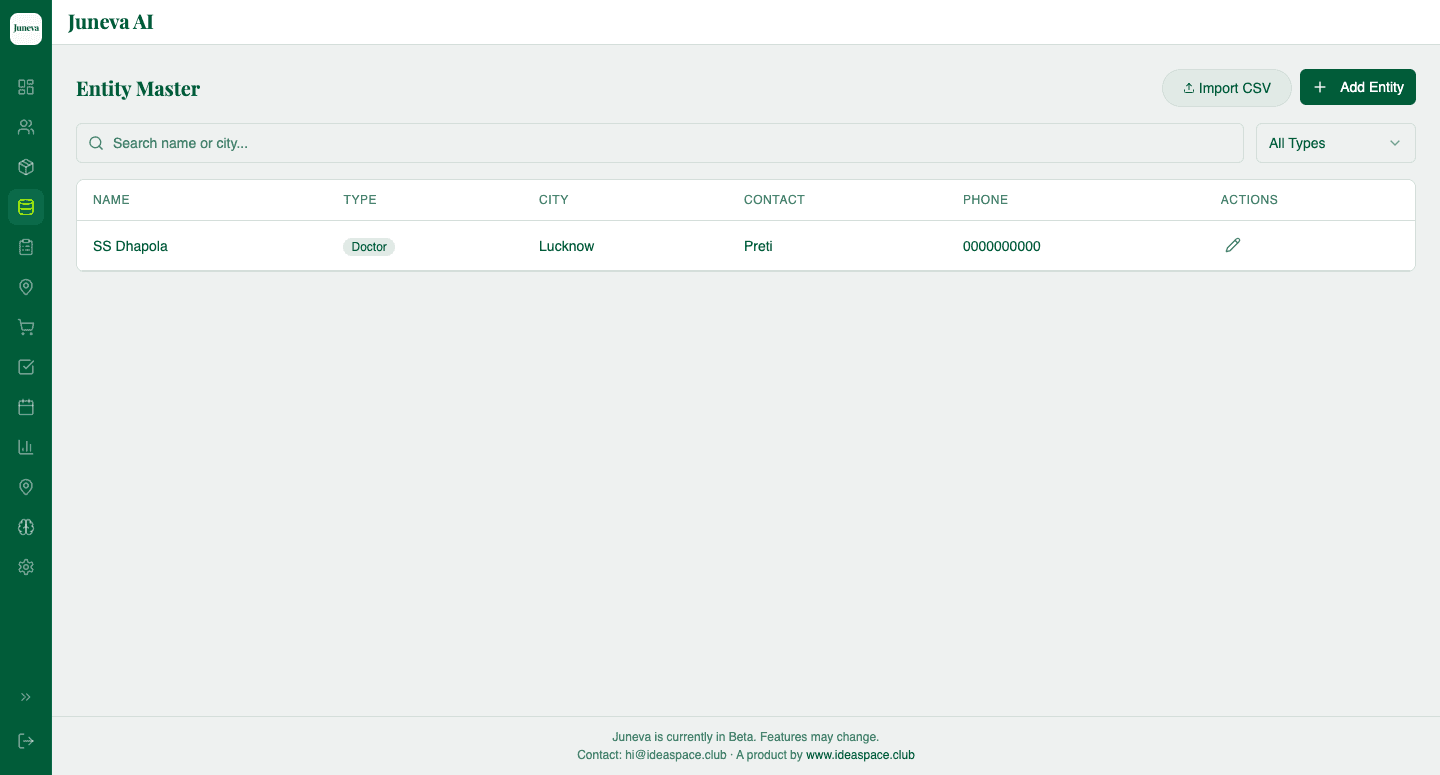
Core Product Screens
UI & UX Philosophy
Juneva was designed with ERP-style clarity and modern SaaS usability — a combination most enterprise tools fail to achieve.
Key design principles applied:
Minimal cognitive overload — field reps log visits quickly, managers review dashboards at a glance
Table-first layouts — because managers think in grids, not cards
Capsule-style action buttons — fast to scan, fast to act
Modal-based editing — context stays intact while making changes
Search and filters on every data page — because at 500 reps, you need to find things fast
Mobile-responsive rep flows — the field runs on phones, not desktops
Unlike enterprise CRMs, Juneva doesn't bury workflows under layered menus. Every major action is 1-2 clicks away.
UX Details
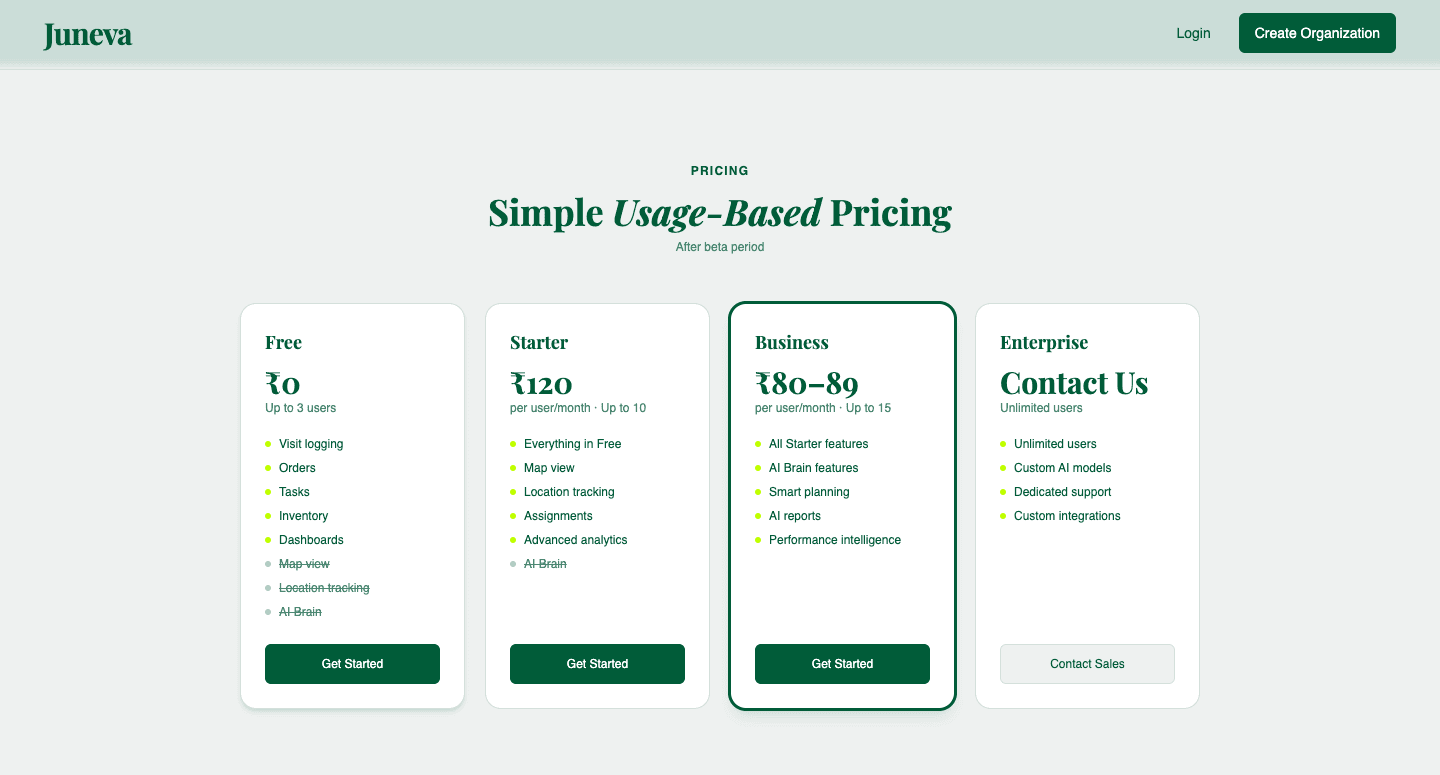
Why Vertical SaaS Wins Here
Generic CRMs fail pharma field teams because they were built for pipeline sales — not territory-based doctor visits, compliance-heavy reporting, or high-frequency daily field logging.
Juneva is vertical by design. It understands medical rep behaviour, territory planning realities, field reporting friction, and manager review patterns. This isn't a feature advantage — it's a product-market fit advantage.
The Market Opportunity
The Indian pharmaceutical industry includes:
3,000+ companies
600,000 - 800,000 medical representatives
Growing digitisation pressure and compliance requirements
An SMB segment massively underserved by enterprise CRM providers
SMB pharma needs affordable SaaS, fast onboarding, field-first usability, and no heavy IT dependency. Juneva targets this segment precisely.
What's Next
Currently in live beta with pharma companies, Juneva is refining workflows in real-world environments before scaling. Paid pilots are launching soon.
The long-term vision is clear: from tracking → to intelligence → to predictive field optimisation.
Reflection: Design by Operational Necessity
The most important lesson from building Juneva is that the best enterprise design doesn't come from aesthetics — it comes from deeply understanding how work actually happens.
Every module in Juneva exists because it reflects a real use case observed in pharma field teams. The design removed friction from workflows that were already happening — it didn't impose new ones.
That's the standard I hold every product I work on to.
Interested in a demo or exploring collaboration? 🌐 juneva.club | 📩 hi@ideaspace.club
Written by Amish Srivastava — UX & Product Designer amishsri.framer.website